When a new James Bond game is announced, the first question on PC players' minds is usually the same: "Will I need to completely upgrade my system?" For 007 First Light, developed by IO Interactive with the Glacier Engine, the first picture that emerges is reassuring. Detailed benchmarks conducted after the review embargo lifted show that the game is far more accessible than expected for a broad audience planning to play at 1080p. However, when the resolution rises to 4K, things change dramatically; without DLSS 4.5 kicking in, achieving a smooth experience becomes nearly impossible. In short, we have a title that is well optimized but also rewards upper-tier hardware.
In this article, we examine the game's PC performance from different angles: Which graphics card delivers what at which resolution, how much difference graphics settings make, whether DLSS 4.5's frame generation really works, and where the game stands in terms of stutter? Our goal is not just to list numbers, but to clearly lay out what these numbers mean for your system.
How Was the Performance Test Conducted?
Measurements were carried out on an AMD Ryzen 9 7950X3D processor and 32 GB of DDR5 memory running at 6000 MHz. On the graphics card side, a very wide range was used: from AMD, the Radeon RX 6900XT, RX 7900XTX, and RX 9070XT; from NVIDIA, the RTX 2080Ti, RTX 3080, RTX 4090, RTX 5080, and RTX 5090. Tests were performed on Windows 10 64-bit with GeForce 596.49 and Radeon Adrenalin Edition 26.5.2 drivers.
The game does not have a built-in benchmark tool. Therefore, an action-packed story sequence, considered one of the game's most demanding scenes, was used for measurements. This choice has an important consequence: the large explosion at the end of the sequence significantly drops the frame rate. Since no similar strain is encountered during normal gameplay, it is much healthier to focus on average frame rate rather than minimum FPS when looking at the results.
The Performance Window Narrows as Resolution Increases
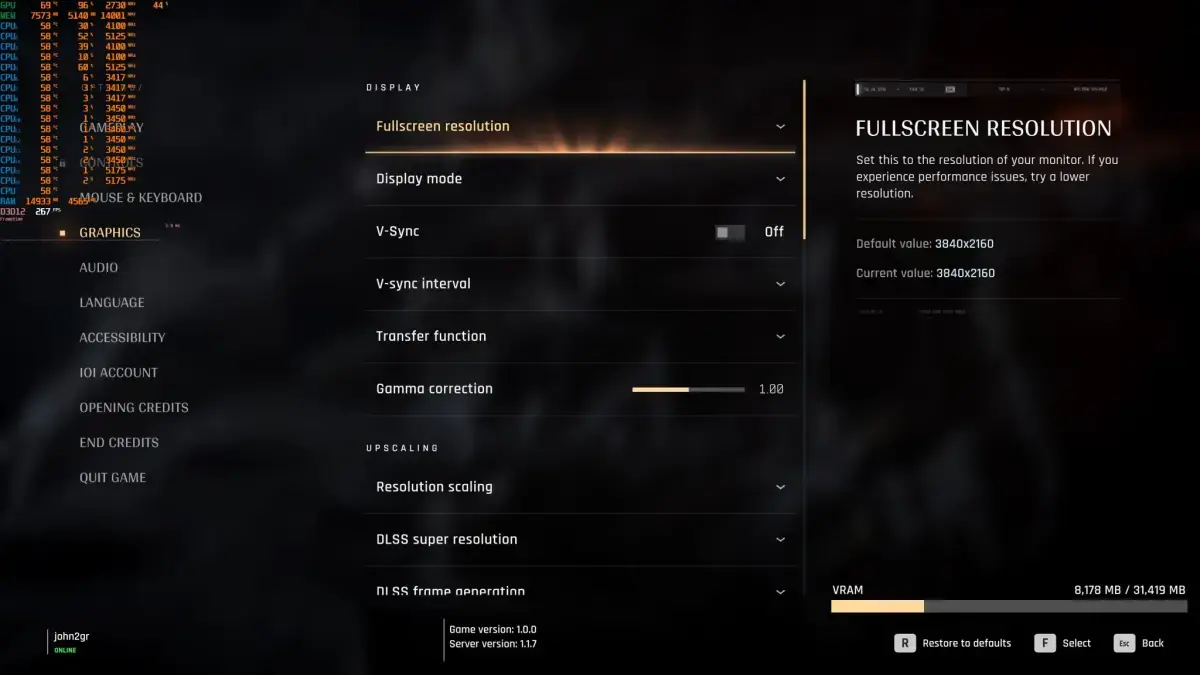
At 1080p Ultra settings, the picture is quite rosy. All tested graphics cards except the RTX 2080Ti manage to exceed 60 FPS. The main reason behind this is that the game runs entirely on rasterization: there are currently no Ray Tracing or Path Tracing effects. Since ray tracing is not active, performance at this level should not be considered a surprise.
Moving to 1440p, things get a bit harder. At this resolution, the five most powerful graphics cards tested can deliver a smooth experience; however, for lower-tier models, reducing settings or using an upscaler becomes unavoidable. The real wall appears at 4K. At this resolution, the only card capable of delivering an enjoyable gaming experience is the RTX 5090. The RTX 4090 can reach an average of 62 FPS, but it occasionally drops below 60 FPS; for a completely smooth feel, a G-Sync compatible monitor is needed.
The practical takeaway is this: if you're a player targeting 1080p or 1440p, the card you have is probably sufficient. At 4K, however, you're forced to rely on either a top-tier graphics card or an upscaler like DLSS.
DLSS 4.5 and Multi-Frame Generation: The Biggest Value Added to the Game
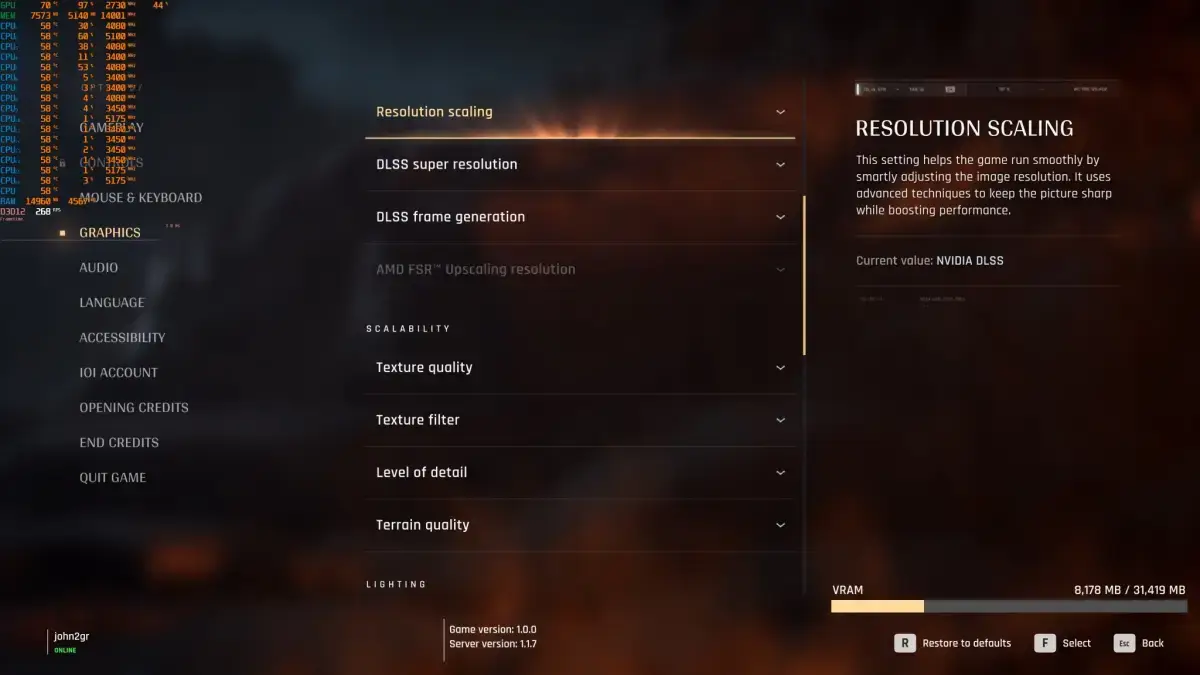
The game ships with NVIDIA DLSS 4.5 support, and this support natively includes MFG X5, MFG X6, and Dynamic Multi-Frame Generation features. On the AMD side, FSR support is available; however, FSR Frame Gen and Intel XeSS 2.0 support are not present. This stands out as a significant shortcoming, especially for AMD and Intel users.
The results achieved in DLSS 4.5's Quality mode at 4K Ultra settings are impressive: minimum 80 FPS, average 110 FPS. When MFG X2 kicks in, the frame rate rises to 190 FPS, and with MFG X3 it reaches 260 FPS. MFG X4 and higher modes produce values that exceed the refresh rate of most 4K monitors. These modes will truly come into their own after the Path Tracing update arrives; in their current form, such high multipliers are not needed.
- DLSS 4.5 Quality (4K Ultra): Minimum 80 FPS, average 110 FPS
- MFG X2: Rise to 190 FPS
- MFG X3: Rise to 260 FPS
- MFG X4 and above: Values exceeding the refresh rate of most 4K monitors
On the image quality side, Multi-Frame Generation implementation is among the best tested. In screenshots taken by moving the camera quickly, some visual artifacts appear during very fast camera movements when the default Motion Blur settings are on. However, when Motion Blur is turned off, almost all of these artifacts disappear. Since you won't rotate the camera that quickly during normal gameplay, you get a clear and stable image even with DLSS 4.5 MFG X4 or X6 enabled.
Graphics Settings Scalability Is Not as Strong as Expected
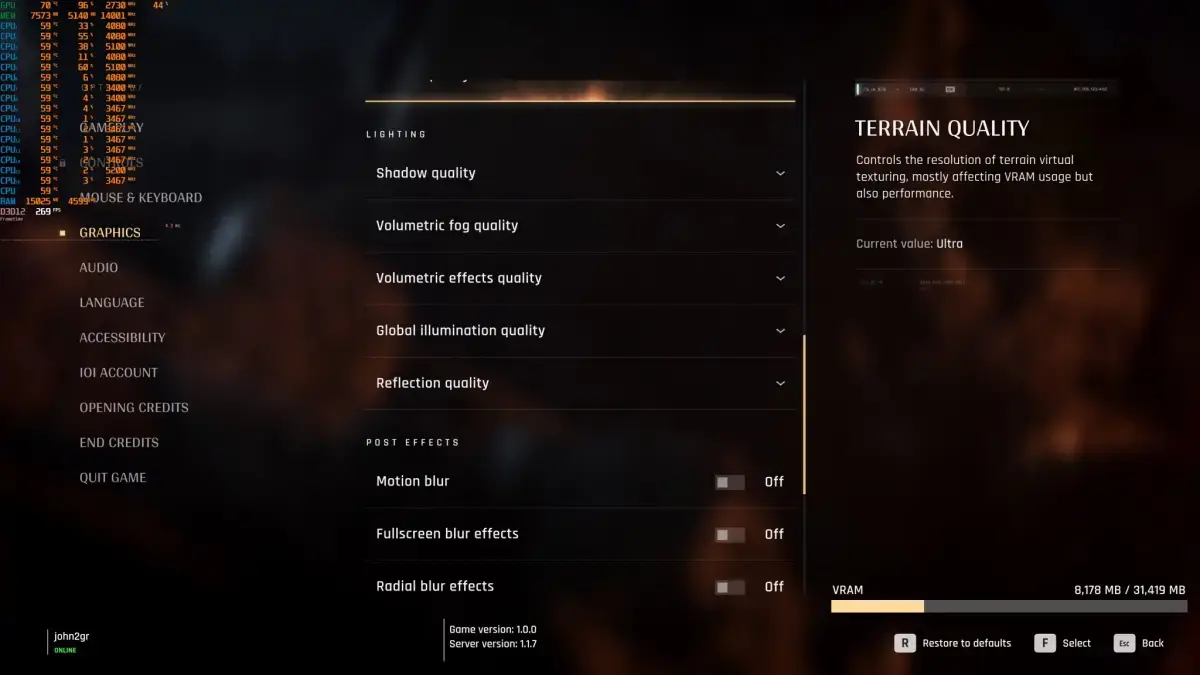
The game offers a fairly reasonable number of adjustable graphics options. Texture quality, terrain detail, Level of Detail, shadows, and more can be changed by the player. However, the impact of these settings on performance falls below expectations.
According to measurements, dropping from Ultra to High provides a 23% increase in minimum frame rate; however, the gain in average frame rate is only 9%. Medium settings improve performance by about 10%, while Low settings bring an additional 17% increase. In other words, even pulling settings down to the bottom doesn't double the frame rate; this shows that the game's graphics load is largely tied to the graphics card's overall power.
In practice, this means: if your system is running on the edge, using an upscaler like DLSS is a much more efficient solution than lowering settings. Because settings scalability is weak, you make a serious compromise in visual quality and get only a small performance increase in return.
CPU Side Is Comfortable, No Stutter Issues
The game does not require a high-end processor. To eliminate graphics card bottlenecks, tests had to be run at 720p, and even at such a low resolution the RTX 5090 was only utilized in the 75-90% range. This picture shows that testing different CPU configurations would be pointless. Most players will be limited by the graphics card, not the CPU.
The results are also positive in terms of technical stability. No stutter was experienced throughout the first mission. Despite the game containing quite large environments, the experience felt smooth from start to finish; not a single stutter was recorded even during action-packed story events. Sudden freezes caused by shader compilation or frame drops when transitioning to large open areas did not appear in this review.
Missing Technologies and the Path Tracing Expectation
Some technologies the game does not support are annoying, especially for AMD and Intel users. Intel XeSS 2.0 support is absent, and AMD FSR Frame Gen is not active either. This seriously limits the options for AMD users who want to benefit from frame generation technology.
On the visual quality side, 007 First Light stands out as one of the best-looking rasterization-based games on PC. IO Interactive has used high-quality textures extensively, and the game world looks truly impressive. Impressive story events and successful weather effects also strengthen this picture. Still, areas where Path Tracing will push the visuals even further can easily be noticed.
This situation has two sides, good and bad. The good news: you can play the game now and enjoy a title that looks extremely good. The bad news is that when the full Path Tracing update arrives, there is an impression that RTX 50 series owners may not be very eager to replay the game from the beginning.
Conclusion: What Should Which Player Do?
Looking at the overall picture, 007 First Light both performs well and looks good on PC. For an enjoyable experience at 1080p, there is no need for an upper-tier graphics card. At 4K, things get difficult; however, the RTX 5090 can deliver a smooth experience even without using any upscaler.
If you're targeting 4K and don't have an RTX 5090, keeping DLSS 4.5 enabled is almost mandatory. Since the game's DLSS 4.5 implementation is already one of the most successful among those tested, we can easily make this recommendation. The only shortcoming is the lack of AMD FSR Frame Gen and Intel XeSS 2.0 support; we hope these two technologies will also be added to the game in future updates.
In summary: the 1080p player is comfortable, the 1440p player should be careful, and the 4K player is dependent on DLSS. The game's technical foundation is solid; no stutter, the CPU side is comfortable, and visual quality is high. We will all see together how the performance picture changes when the Path Tracing update arrives.