In Dota 2 you'll hear phrases like "I play pos 1" or "we need a pos 5" in your very first matches. These numbers aren't a rank or a power order; they describe a division of labour: which lane each of the five players stands in, who gets gold first and who protects whom. A player who enters a match without knowing their role can steal the team's gold and break the balance even with the best intentions. This guide explains what the position numbers mean, the lane and duties of each of the five positions, and which position a new player should start with.
What Do the Position Numbers Mean?
The numbers show farm priority: position 1 is the player who needs the most gold and levels, position 5 the one who needs the least. Positions 1, 2 and 3 are called "cores"; they are expected to grow strong with their items and win the match. Positions 4 and 5 are "supports": they let the cores grow, provide vision and set up fights. Valve's ranked matchmaking queue uses the same split: before the match you choose whether you'll play Safe Lane, Mid Lane, Off Lane, Soft Support or Hard Support, and the system builds a lobby in which all five positions are filled.
The Five Positions One by One
- 1 – Carry (Safe Lane): The player who gets the most gold on the team. Stands in the safe lane with the Hard Support, hits creeps and collects items in the first minutes, and becomes the team's main damage source in the late game. Weak early on; farming without dying is the real skill. Starter picks: Wraith King, Sven and Juggernaut.
- 2 – Mid (Mid Lane): Stands alone in the middle lane and gains levels and gold through a one-on-one duel. The core who has the earliest impact on the map after laning; collects power runes and ganks the side lanes. Starter picks: Dragon Knight and Viper.
- 3 – Offlane (Off Lane): Stands in the hard lane, opposite the enemy Carry. The job is to survive, disrupt the enemy's farm and start team fights, which is why durable heroes are usually picked. Starter picks: Axe, Centaur Warrunner and Bristleback.
- 4 – Soft Support: Starts in the same lane as the Offlane, then roams the map. Harasses the enemy support, brings runes to mid and looks for kill opportunities; the team's playmaker. Starter picks: Lion and Witch Doctor.
- 5 – Hard Support: Stands in the safe lane with the Carry and doesn't hit creeps; protects the Carry's farm, buys vision items, heals and, if necessary, dies for the Carry. The position that does the most work with the least gold. Starter picks: Crystal Maiden and Lich.
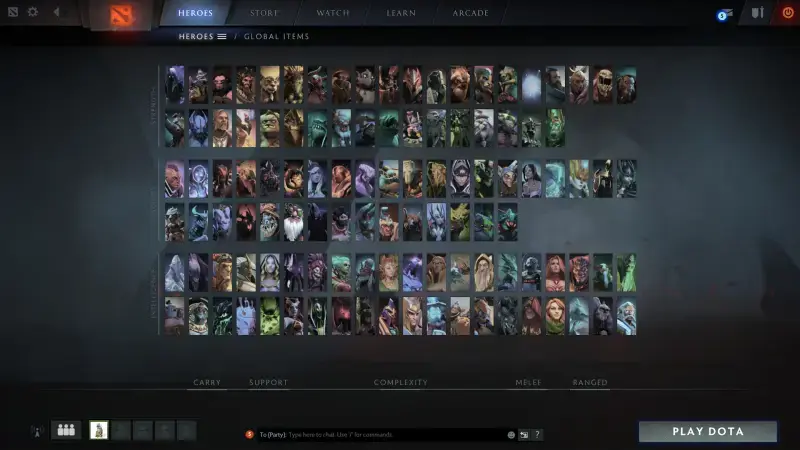
The safe lane and the hard lane swap sides on the map: for Radiant the safe lane is the bottom lane, for Dire it is the top lane. So the Carry and Hard Support always start in their own team's safe lane, while the Offlane and Soft Support start opposite the enemy's safe lane. When picking a hero, look at the "Complexity" rating on the in-game hero screen; most of the heroes above are low complexity and enough to learn the logic of the position.
Lane Assignments and Game Phases
The first ten minutes of a match are the laning phase: positions 1 and 5 stand in the safe lane, position 2 in mid, positions 3 and 4 in the hard lane. Cores earn gold by last-hitting and reduce the enemy's income by denying their own creeps; supports, instead of hitting creeps, harass the enemy, open up vision and keep the lane safe. Who should hit the creeps is the most argued topic in this phase: in the safe lane the creeps belong to the Carry, in the hard lane to the Offlaner.
Once laning ends, the team groups up on the map. The Soft Support and Mid make the first rotations, the Offlaner starts the fights, and the Carry keeps farming to complete items. In the mid game, towers, Roshan and map control come to the fore; the Observer and Sentry Wards bought by the supports are the foundation of that control. In the late game, the fully itemised Carry becomes the team's deciding force; the supports' job is to get them into the fight in one piece.
Which Position Should a New Player Pick?
Each position teaches a different skill, and trying them in turn during your first weeks develops you faster than locking onto a single hero. Here is the order we suggest:
- Start with Hard Support (5): No last-hit pressure and you're not waiting for gold; you learn vision items, healing and how to read the map. Crystal Maiden or Lich is enough for the job.
- Continue with Offlane (3): With a durable hero you learn to survive and when to start a fight. Axe or Bristleback suits a beginner.
- Practise last-hitting with Carry (1): While a support protects you in the safe lane, you practise last hits and denies. Wraith King or Sven are forgiving heroes.
- Don't rush into Mid (2): The middle lane demands the one-on-one duel, rune timing and reading the whole map at once; it's where the most mistakes are made when entered before understanding the other positions.
Try a new hero in the in-game "Demo Hero" mode rather than in ranked; move to normal matches once you know the range and mana cost of the abilities. When you enter the ranked queue, mark only the positions you know; the system assigns you to one of the positions you selected.
Conclusion
Dota 2's five positions are numbered by farm priority: Carry and Hard Support start in the safe lane, Mid in the middle lane, Offlane and Soft Support in the hard lane; 1-3 are cores, 4-5 are supports. If you're new, start with Hard Support, then try Offlane and Carry, and leave Mid for last. Once you know your position's job, both picking a hero and getting along with your teammates become easier.
Once your position is settled, take a look at our Dota 2 rank system guide for the climb, and if you're wondering whether your PC can run the game, read our Dota 2 system requirements article.