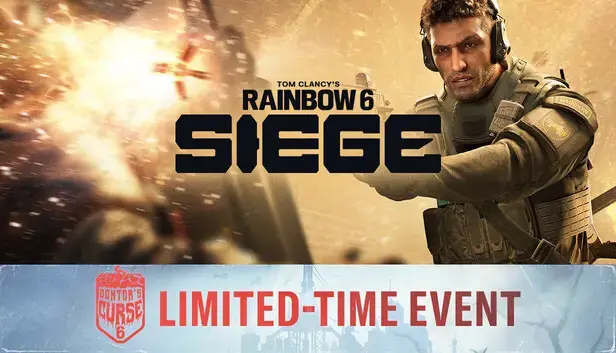
Rainbow Six Siege's Y11S3.2 balance patch tackles the game's mid-season balance on three separate layers. The first is a set of follow-up fixes for Noor, the season's new operator. The second is a group of major changes affecting Tachanka, Solid Snake, and Valkyrie. The third is a series of small tweaks that aren't meant to move the meta but polish how the game feels. In this article, we go over what the patch brings, how the development team explains the reasoning behind each change, and what it could mean for players.
The Patch's Overall Logic: Big Moves and Quiet Polish
The patch notes split the changes into three main headings: post-release follow-up fixes, major changes, and fine-tuning. This distinction matters because each category serves a different purpose. Follow-up fixes fill in the gaps a newly released operator has in the first few weeks. Major changes genuinely alter an operator's playstyle or strength. Fine-tuning focuses on fixing gameplay details and consistency without shifting an operator's overall power level or flexibility.
The development team stresses that fine-tuning only provides quality improvements and quality-of-life benefits, and isn't meant to shift the meta. It also wants these kinds of small fixes to continue as a steady flow alongside major updates. The goal is for the game to evolve at a consistent pace. In other words, instead of waiting for large, balance-breaking patches, they want to keep the game moving with small but frequent touches.
This approach also gives players predictability. When an operator's name shows up in the patch notes, you no longer have to expect a big swing in power. Looking at the category heading gives a quick idea of how heavy a change is. Still, the sum of small tweaks can make a noticeable difference, especially for changes like fire damage that affect multiple operators.
Major Changes: Tachanka, Solid Snake, and Valkyrie
Tachanka's Shumikha Launcher receives the most notable addition in this patch: a new firing mode that detonates Incendiary Grenades on impact. In the current system, the grenades bounce and spread fire. This lets Tachanka apply pressure without exposing himself to enemy fire, but the behavior is hard to control in precise situations. The delay created by the bouncing mechanic also reduces reaction speed. Since small timing differences can decide the outcome of a round during fast swaps, this delay is a significant disadvantage.
With the new mode, the developers aim to lower the skill floor required to use the gadget effectively. The impact-triggered mode gives more reliable results when targeting a specific spot or reacting to enemy movement. The bouncing behavior isn't removed. That keeps the option of building layered area denial and controlling space indirectly. The choice between the two modes gives players the flexibility to pick the best method for the situation.
On the Solid Snake side, the direction is reversed. The number of Soliton Radar MK III precision mode charges drops from 4 to 3. According to the developers, the radar provides strong utility in many situations and lets Snake apply pressure without taking much risk. The team wants to slightly reduce that utility to encourage more deliberate use and clearer target prioritization. Losing a single charge may seem small, but when choosing precision mode, you'll now have to think more carefully about whom to spend a charge on.
Valkyrie, meanwhile, gets the Glaive-12 as a secondary weapon. The aim is for her to set up and use her cameras more efficiently and to create sightlines without increasing her overall power. According to the developers, this weapon helps her open sightlines faster and from farther away. So this change doesn't promise direct combat power; it makes the camera placement process easier.
Noor's Follow-Up Fixes: Her Anti-Shield Role Becomes Clearer
According to the developers, Noor's kit had fallen short on several fronts. That's why a package is coming that boosts both his anti-shield abilities and his chances of survival. The goals are for the Horus Lance Launcher to be more reactive, to make ballistic shield operators pay more heavily for positioning mistakes, and to reward holding the launcher more in return for the risk of doing so.
Some of the changes relate directly to speed and timing. The drilling time through ballistic shields, soft surfaces, and indestructible solid surfaces drops from 2 seconds to 1.5 seconds. The launcher's equip animation also uses the quickdraw animations, and its duration falls from 0.9 seconds to 0.4 seconds. This considerably shortens the window in which Noor is vulnerable while drawing the launcher.
The other group increases damage and impact strength. The guard break strength when the projectile hits a ballistic shield rises from 30% to 100%. The Horus Lance's impact damage to an operator goes up from 50 to 80. In addition, shield-carrying operators can also take damage while in the shield-removal animation. The hitbox is updated to be more accurate and consistent. Taken together, this means Noor becomes both a faster and a more punishing option against shield operators.
Fine-Tuning: From Capitão to Barbed Wire
The expansion interval on Capitão's Fire Bolts drops from 1 second to 0.9 seconds. The developers want the bolts to establish pressure sooner after being placed and to work more reliably. On the Clash side, the slowdown applied when enemies run away from her rises from 5% to 10%. The Taser only worked at full strength while enemies moved toward Clash, and its effect was very weak when they fled. This difference reinforced directional counterplay. The new value helps Clash maintain pressure and area control while enemies try to disengage from the fight.
Placement restrictions for Osa's Talon-8 Clear Shield are being reduced. This lets the shield be deployed in a wider range of situations and reduces friction when setting up a position. The notes don't detail exactly which restrictions are being lifted, so you'll need to test in-game to see which spots have opened up in practice.
Fire damage is also in this category. Fire damage rises from 12 hp to 14 hp. The team wants to increase the deterrence and readability of fire-based hazards and make standing in or moving through these areas have more immediate consequences. Capitão, Dokkaebi, Goyo, Noor, Tachanka, and gas pipes are affected by the change. With Tachanka and Noor appearing in both major and minor changes, these two operators become the most heavily touched names in the patch.
Barbed wire also gains a new role. Ram's BU-GIs now get caught on barbed wire, stop completely, and self-destruct. The developers note that this makes barbed wire a reliable counter to BU-GIs. Defenders are rewarded when they place the gadget in the right spot, while Ram players are pushed to plan their advance routes and defensive setups more carefully.
Fixed Bugs
The patch also includes various bug fixes. On the gameplay side, the issue where defenders lost points for destroying their own barbed wire is resolved. There are three operator-related fixes, and all three concern the new abilities:
- The hitbox of Noor's Horus Lance projectiles was too large; this has been fixed.
- The Horus Lance Launcher's reticle wasn't affected by the Reticle Opacity option; this has also been resolved.
- The right button on Osa's Talon-8 shield switched from ON to OFF when deployed; this issue has been fixed.
Three user experience issues are addressed. In the locker, you couldn't navigate left or right when the area above the OPEN NOW button was selected. New players weren't shown the Recruit Rewards window unless they restarted the game. The voice chat indicator would also occasionally stop appearing. On the audio side, the drilling sound that played when electrified barbed wire destroyed Noor's Horus Lance projectiles is fixed. Though these small details may seem trivial individually, they could be annoying in everyday play, especially for things like the new player experience and reticle settings.
What Does This Patch Mean for Players?
For those who play Noor, the most obvious result is that the operator can now genuinely fulfill his anti-shield role. The shorter drilling time, the quick equip animation, and 80 damage make the Horus Lance a stronger deterrent both on defense and in encounters with shield operators. Shield players, on the other hand, have to account for the fact that they can take damage even during the shield-removal animation and that guard break is applied at full strength. This noticeably raises the penalty for positioning mistakes.
Tachanka players will experience the flexibility of being able to choose between two firing modes. The impact-triggered mode will be useful on clear targets, while the bouncing mode will remain an option for area control. For Snake players, the reduced radar charges will require saving precision mode for strategic moments. On the Valkyrie side, the Glaive-12 promises to speed up camera setup. For Ram players and those defending against them, barbed wire introduces a new calculation. Thinking about where the defender could place wire when sending out a BU-GI should now be part of the plan.
Beyond that, the message of the Y11S3.2 patch is quite clear. The development team is choosing to pursue big decisions and small polish at the same time, moving the game forward in regular steps rather than a single big leap. How these changes work in the field will become clearer in the coming weeks through player feedback and operator pick trends. Until then, retesting Noor, Tachanka, and Snake according to your own playstyle is a good place to start.