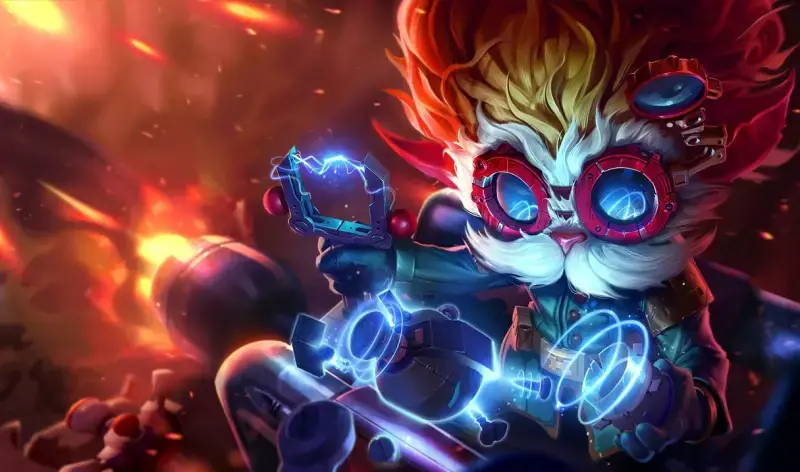
League of Legends is one of the biggest brands in the gaming world today, known by millions of players for its tournaments and massive champion pool. However, the first steps Riot Games took on the road to this success pointed to a very different game. An old investor pitch brought to light by Necrit, who creates content on YouTube, and Paul “Pabro” Bellezza, a senior figure at Riot, shows in full detail the era when the game was called Onslaught: War of the Immortals. This pitch reveals that League of Legends not only underwent a name change, but also shows how it evolved from a radically different design philosophy to its current structure.
A Legend Emerged from an Investor Pitch
In the video, Necrit explains that he told Riot he “wanted to see the most primitive form of League of Legends,” and in return, the company shared an old investor pitch. This pitch contains video footage from the game's early period, design documents for several champions, notes about the universe's story, and screenshots. Some previously leaked images vaguely hinted at this era, but this comprehensive archive confirms many unknown aspects of the game for the first time. The resulting picture shows a production almost unrecognizable from today's League of Legends.
One of the most striking aspects of this pitch is that the game also had a different mechanical vision. Players could customize the “immortal” characters that would take the battlefield themselves; moreover, they could only temporarily bring these heroes into battle at certain critical moments. Unlike the champions who are constantly controlled in today's LoL, this design promised a much more strategic, resource-management-based experience. Additionally, some heroes were exclusive to either the “order” or “chaos” side, and players would swear allegiance to one of these two forces right at the start of the game. This allegiance was designed not only to affect the story, but also directly affect gameplay.
A War in the City: Chaos and Order
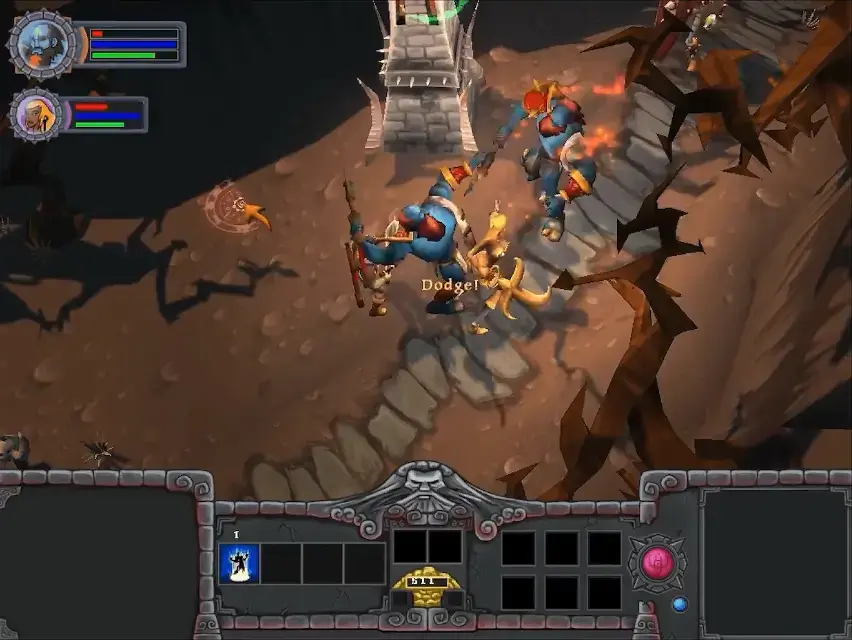
The setting of the game is also far from today's empty Summoner's Rift map. In the Onslaught era, battles took place in a caricatured cityscape divided between the realms of “order” and “chaos.” This environment design shows that the game was planned with a more story-driven structure. The balance between the two sides was the core conflict of the game's universe, and players' choices directly affected this balance.
Summoner's Rift, often described as an 'empty field' today, has been shaped over time by the needs of competitive play. Onslaught's city map, by contrast, pointed to a structure that was both more visually dynamic and more ambitious narratively. Allowing players to choose between realms added a role-playing element to the game that most of today's MOBAs lack. This also reveals how much Riot simplified the gameplay over the years.
Familiar Names, Changing Faces
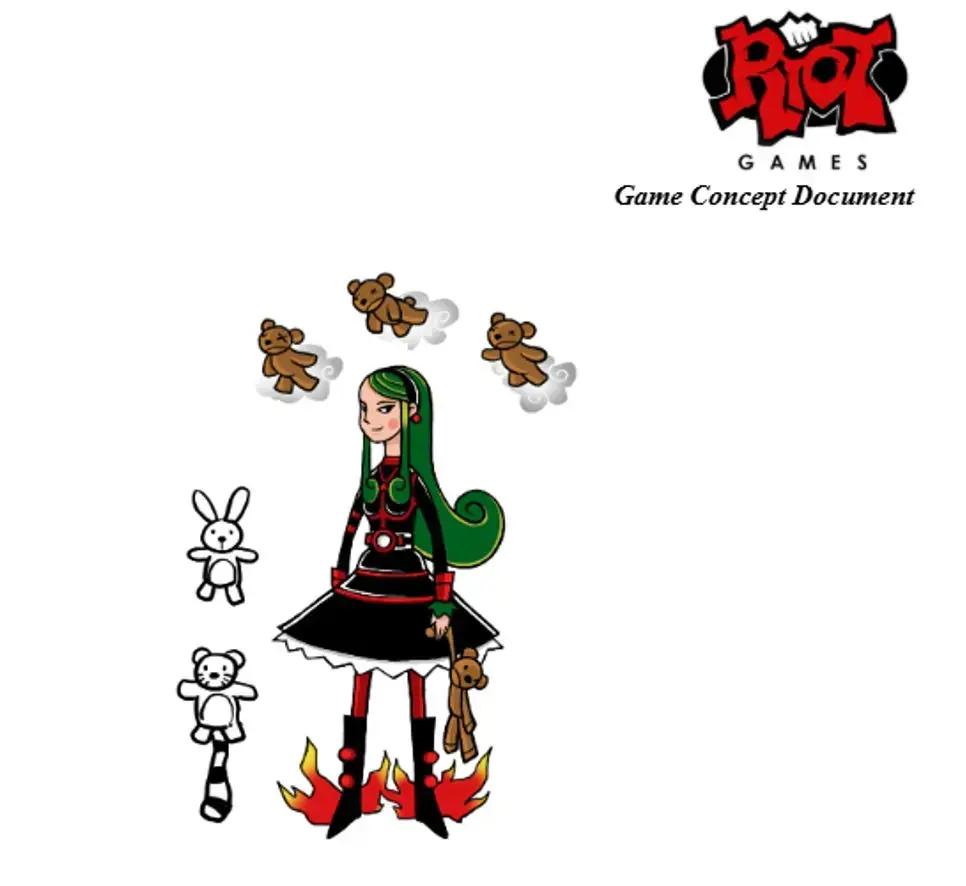
Even though everything is different, traces of some of the characters that form the foundation of League of Legends can also be seen in this old pitch. Annie appears with her flaming teddy bear in hand, but visually she is quite different from her current form. As for Sion, we see, in the author's words, 'a beard for god's sake.' These primitive designs prove that the characters' identities actually went through a very long evolutionary process.
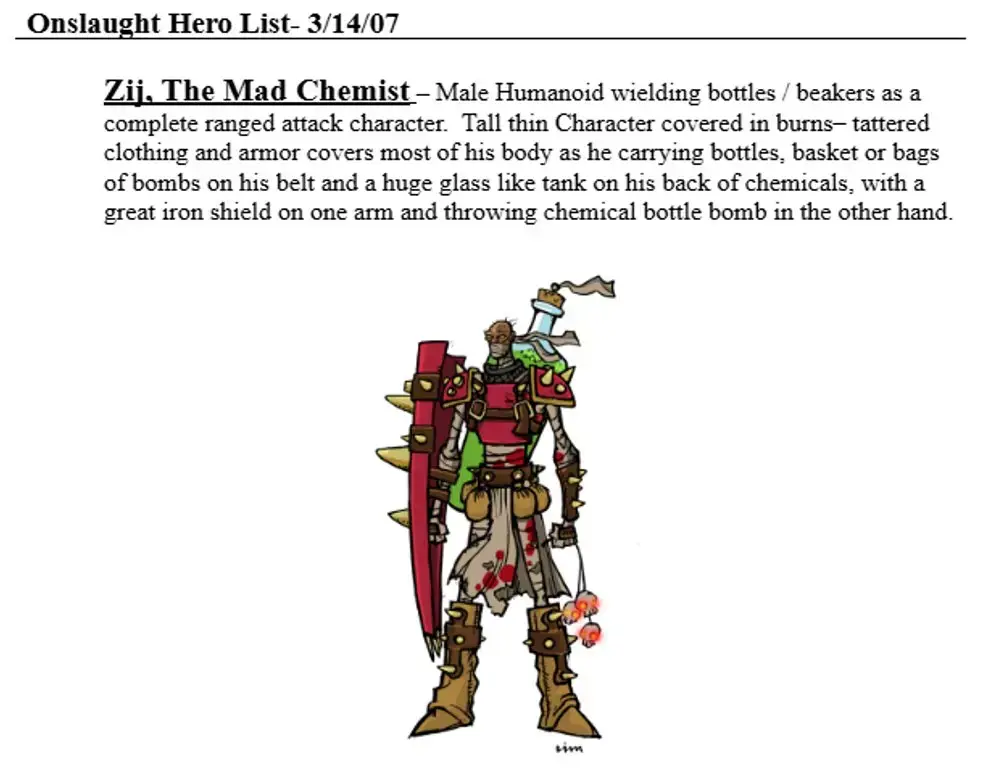
Another notable name is Xizun, the blind monk we know today as Lee Sin. In the pitch, his passive ability is described in its original English as 'Built like a brick wall on roids,' meaning 'as durable as a brick wall pumped with steroids.' Also on the list is Zij, the ancestor of Singed, with an almost unchanged appearance. Small details like these show that the game's skeleton actually began to take shape earlier than thought. The change of some names was also part of Riot's marketing and branding strategy.
An Ancient Tale: The Bloody Logo and the Birth of Chaos
One of the most interesting parts of the pitch is the game's story design. While there is a neutral balance between the two sides, the birth of an entity described as 'a kind of antichrist' tears a massive rift in reality; chaos threatens to devour all of existence. This dark narrative fits the gothic and aggressive tone that was popular in the gaming world at the time. Moreover, throughout the video, Riot's logo is shown covered in blood, which sums up how 'late 2000s' the pitch feels.
This storytelling approach is quite far from the more colorful and diverse universe understanding that League of Legends would later adopt. Players of that era were quite accustomed to 'dark fantasy' concepts, and Riot used this language to impress investors. However, as the game evolved, this grim tone gave way to a narrative that appealed to a wider audience, sometimes comedic and sometimes epic. Still, this first pitch is very valuable for seeing the rebellious and boundary-pushing energy at the origins of the League universe.
How Do Onslaught's Ideas Live On Today?
Some concepts designed during the Onslaught era appear in different forms in League of Legends today. For example, players swearing allegiance to one side can be read as an early precursor to today's regional leagues and team fandom culture. On the other hand, the mechanic of 'temporarily summoning heroes at critical moments' may have inspired similar ideas later tried out in certain game modes and different systems in League of Legends: Wild Rift. Even though Riot did not use these mechanics exactly as they were, it is fair to say that such experiments were embedded in the game's DNA.
This old pitch also reveals the investor language of the gaming world in the late 2000s. At that time, dark stories, epic battles, and narratives of a 'threat that would destroy everything' were frequently used to explain that a game would reach a large audience. Onslaught fits exactly this pattern: an antichrist-like entity, bloody logos, and an ancient war between two extremes. Today these elements are handled more subtly, but their roots can be found in these early pitches.
Why Is This Discovery Important?
Archival documents like these are unique keys to understanding a game's current state. League of Legends' dominance in the MOBA genre can make it seem like a static product, but this investor pitch reminds us how much of the design process was filled with exploration, experimentation, and abandonment. It is also a great example of Riot's transparency philosophy: the company does not hesitate to share its corporate history with fans.
For players, this adds a different dimension to the 'classic League of Legends' debates. Many people miss the old maps and champion designs, but the Onslaught era shows that true classicism could mean going back even further. Sion's orange beard, Xizun's abilities, and the chaos/order world might seem quite foreign to today's players. Still, these primitive ideas are just a few of the bold steps that laid the foundation for League of Legends' current success.
Conclusion: There Is More Depth on the Road to Becoming a Classic
The video published by Necrit is an important archival work shedding light on League of Legends history. The investor pitch for Onslaught: War of the Immortals is instructive not only for nostalgia enthusiasts, but for anyone interested in game design. A game's name, visual identity, and story can change, but the traces of good ideas always reveal themselves somewhere.
In the coming years, Riot is likely to share more documents from its past. Such content increases the community's knowledge of the game's evolution while also allowing the company to engage in sincere communication. For now, we have an impressive time capsule from League of Legends' wildest and most creative era. Where the true 'classic' experience begins and ends is more debatable than ever.