For most players, Onimusha holds a special corner in Capcom’s dark action adventures. Drawing from the horror-laden narrative of Resident Evil, the series seemed to anticipate today’s popularity of sword games. Way of the Sword brings this idea back to the agenda after a gap of nearly twenty years. Yet the opening minutes of the game make you feel less like medieval darkness and more like you’re watching a slapstick film. This raises the question: “Will the new Onimusha foreground its old seriousness or this new clumsiness?”
In the section we played up to the first few boss encounters, the answer isn’t clear: the game tries both at once. Sometimes it leans on feudal Japan’s dark mythology, sometimes it shows protagonist Musashi as invincible as a manga hero, and sometimes it leaves you alone with quiet moments spent following Kyoto’s map markers. This drifting isn’t a problem in itself, because a strong tonal identity can be one of the most memorable aspects of a game. However, Way of the Sword struggles to sustain the lively comedic energy it captures during its opening. Oddly enough, the funniest, most concentrated moments appear in the early scenes, before any dark secret has been unraveled.
A Legacy Returning After Years: The New Onimusha
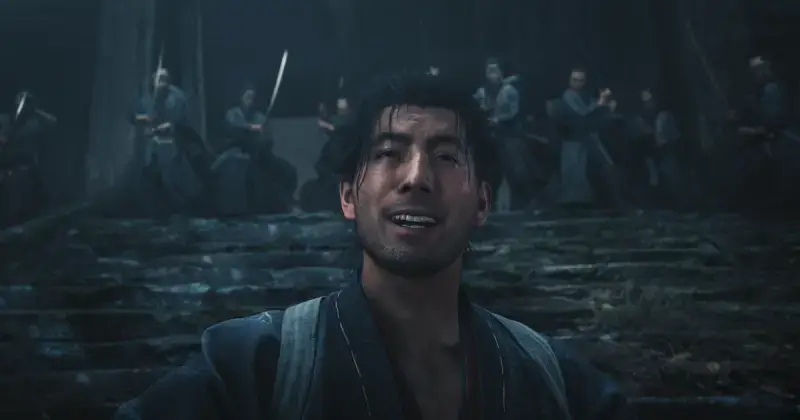
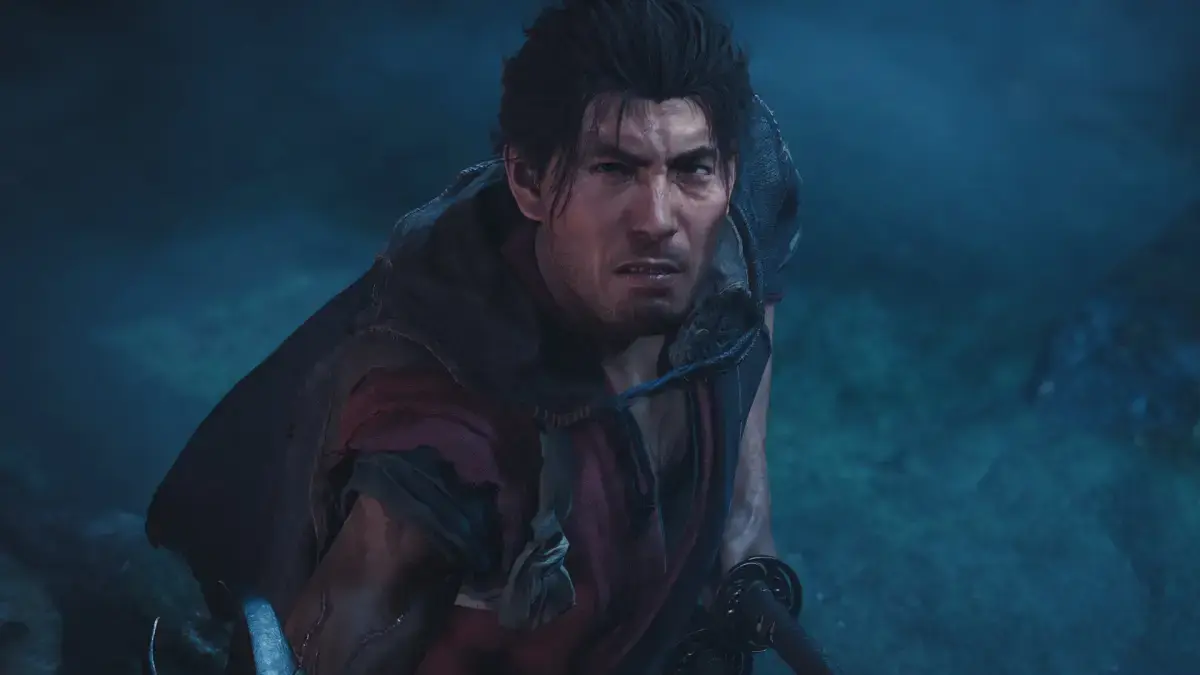
This signature action-RPG from Capcom originally stood out in its early days for its balance between combat and exploration. The new game also aims to offer a modern interpretation of that balance. Protagonist Musashi makes his character felt from the very first moment, with features evoking Toshiro Mifune—one of samurai cinema’s iconic faces—and exaggerated expressions. In the English voice acting, Kenichiro Thomson’s performance lifts the dialogues out of the ordinary; Musashi’s bewildered looks and frowns, in particular, constantly give the player a little reason to smile. The animations join in on this comedic language, too: his clumsiness while trying to get out of a tight hiding spot stands in perfect contrast to the character’s “legendary swordsman” identity.
At this point, it’s worth remembering that sword games have become increasingly popular in recent years. Titles like Sekiro and Ghost of Tsushima have raised player expectations quite high. Way of the Sword has to offer its own personality alongside those games. The humor in the opening could be the key to the game’s distinctive identity, but that identity needs to be felt not only in cutscenes, but across every element of gameplay.
That contrast actually shows how sound the idea at the game’s core is: knocking a serious hero down makes him more human and more entertaining. The opening chase is the purest example of this. After waking up under a bridge, Musashi finds himself shouting an English-accented “WOT?” at children eyeing his rice ball; moments later, he’s running from a crowd of students through a muddy village, with no choice but to kick boards at them. This scene is the clearest sign that the game can break away from its dark atmosphere and laugh at itself. Unfortunately, that energy only returns every so often in the following hours.
Combat and Physical Comedy: Fun at the Edge of the Sword
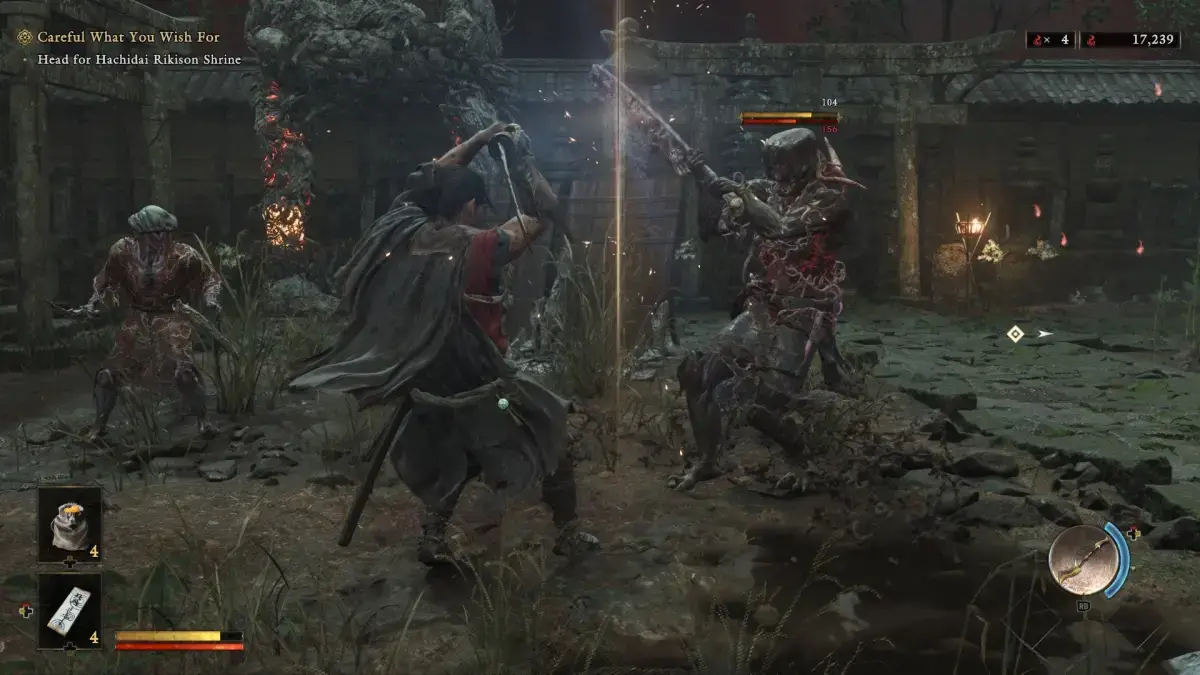
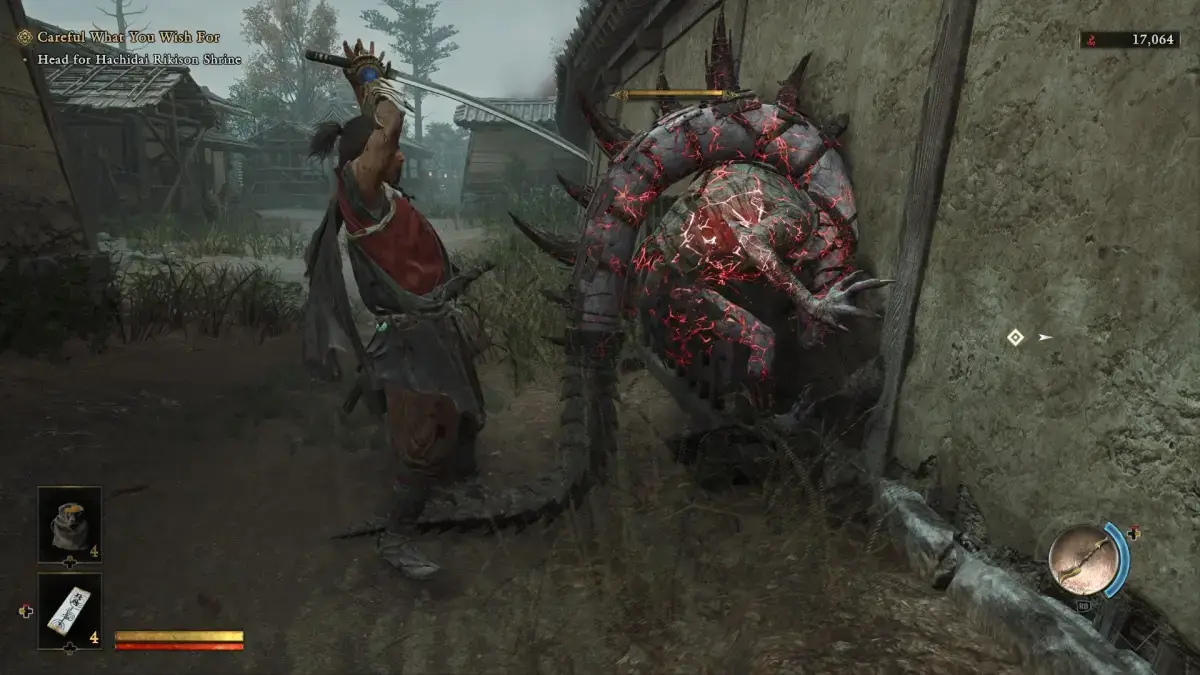
The strongest part of Way of the Sword is undoubtedly its combat system. The sword-parry move is a mechanic that deflects enemy attacks, throws them off balance, and gives a deeply satisfying feeling. Cursed arm or not, combat is highly physical and reactive. After deflecting an enemy attack, in particular, you can shift direction and launch one foe into another. This makes the two enemies collide and stagger each other, often with a hard physical result that feels as if a “bonk” sound effect has just played. Some enemies are even knocked into walls or spiked surfaces, where they squirm helplessly for a while. Moments like these make you feel combat isn’t just a matter of trading damage, but a toy box waiting to be discovered.
Another entertaining side of the game is being able to use environmental objects as weapons. In an approach reminiscent of the prop-fu tradition in Jackie Chan movies, wooden planks, wheelbarrows, and throwable barrels can all be used against enemies. Defeating an ancient evil with a wheelbarrow may sound absurd, but in the game it’s just as enjoyable. However, it has to be said that such objects don’t appear often enough in the game world. This mechanic—which rewards players for finding creative solutions and is far more memorable than standard sword duels—becomes rarer over time.
To be honest, though, plain sword duels aren’t bad either. There’s enough depth for players who want an “honorable” fight; the trio of aiming, distance control, and parry timing is well put together. But these duels often can’t deliver the “I was there” feeling created by the physical comedy. The game truly shines in chaotic moments where its systems interweave. If environmental objects had been offered more generously, the combat as a whole would have been considerably more memorable. But Way of the Sword uses the idea as decoration instead of embracing it.
One scene from the opening is enough to show this balance: after a glorious duel, Musashi lets filth splatter across his face while fleeing from the students of the enemy he killed. This shift between heroism and clumsiness is one of the moments the game gets most right. Far from diminishing such a scene, the dark atmosphere makes it even funnier, because the player can still see flaws in the character within a bloody world. Way of the Sword becomes stronger the more often it captures that strange sincerity.
Kyoto’s Gloom and the Slowing Pace
The game’s semi-open world structure stands out as one of its most debatable parts. Kyoto looks like a large area to explore, but in practice it pushes you through corridor-like paths. This limits the added value from both a story and action perspective. While the player is constantly directed toward the next objective, the question “why is this area so big?” inevitably takes root in the mind. A more compact, focused structure could have increased both the combat tempo and the atmosphere’s intensity. As it stands, some sections offer very little outside of waiting for the next bright moment.
Add in a large number of cutscenes and NPC dialogues, and the fast pace of the opening is seriously worn down. Not all the dialogue is bad, of course; fortunately, some lines feature good jokes built around Musashi’s facial expressions. But their sheer number and a few monotonous deliveries make it hard to settle into your seat. The game is caught between two poles: it’s neither a fully cinematic storyteller nor a seamless action experience. The rhythm lost while moving between them unfortunately scatters the player’s attention.
On the bright side, just as the tempo drops, a boss appears. Enemies with manic eyes and exaggerated behavior, in particular, have so much character that they closely recall the over-the-top bosses of Metal Gear Rising. These encounters bring back the game’s strongest moments and make you want to beat just one more boss. The game may not always be aware of its own strengths, but it never completely forgets them.
Another Sword Between Comedy and Darkness
In the end, Way of the Sword appears to be a game that deserves to be a successful action-adventure but falls short of its potential. The sword-parry system delivers a modern combat experience shaped by split-second reflexes. Comedy, meanwhile, grows most naturally in the opening; but rather than turning that tone into an identity, the game adopts an approach that only remembers it every now and then. Time spent in Kyoto’s gloomy corridors lessens the impact of those bright moments; even so, the unhinged energy of boss fights keeps you in the game.
The reason tonal shifts are so difficult here is that humor only works when it’s built on seriousness. The best moments come while facing a terrifying enemy or immediately after a grand duel. If Capcom had used that contrast more boldly, Way of the Sword could have been a much more original project. As it is, the two tones undercut each other’s potential; still, the moments that make you smile and make your fingers sweat usually win out.
If the second half of the game manages to use that opening humor and creative combat moments more often, there could be a genuinely special experience here. What we’ve seen so far suggests this: Onimusha: Way of the Sword is at its most itself whenever it drops its serious face. So, as you start the game, be ready to laugh at the hero’s clumsiness—because the moments where it truly shines are the ones where it doesn’t take itself too seriously. We hope Capcom picks up on that hint and spreads the wild energy across the whole game, leaving players to hurl wheelbarrows, swing wooden planks, and stare at the bewildered expressions of a samurai.