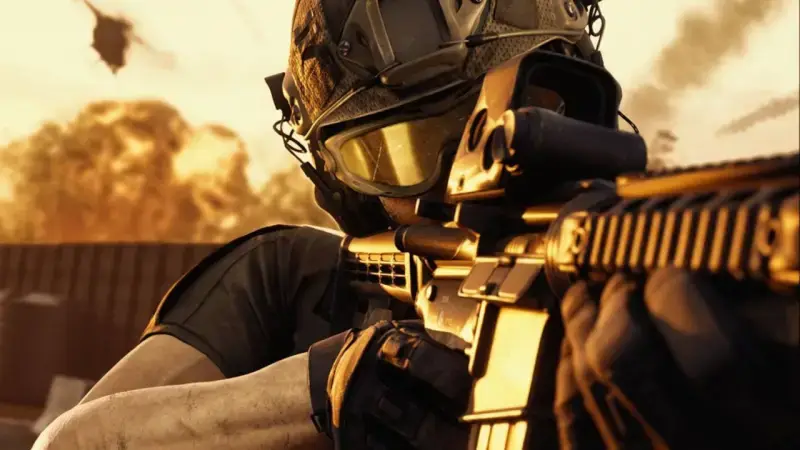
The FPS genre has been stuck between two poles for years: the slow and punishing experience of realistic military simulations and the fast, flashy world of arcade shooters. Right in the middle, a new candidate has emerged for players who want satisfaction from both: Wardogs. The new project by Bulkhead studio, the developers of Battalion 1944, is already being frequently called "the next big multiplayer FPS" in the field. So is this attention deserved? First impressions from players who spent five hours with the game in the closed test are quite positive. In this article, we break down Wardogs' core dynamics, economy system, class debates, and early access plans.
What Is Wardogs and Why Is It So Talked About?
Wardogs is a PvP-focused FPS and supports 100-player servers. The main mode in the closed test works as three teams vying for the same area on a massive map: Teams fight to capture the same piece of land, and the side with the most players in the area scores points. The "hot zone" inside the circle doubles the player count; this guarantees it to be the point where the most conflict and blood are spilled. This format is directly inspired by the popular "Arma: King of the Hill" mod developed for Arma 3.
The game's most important promise is finding a clear middle ground between the "hardcore Arma" and "casual Battlefield" mindsets. Weapons feel fast and controllable; aiming is not complicated enough to scare beginners. To make a basic contribution, all you need to do is stand in the area and fire at other teams. For a player accustomed to Battlefield fun, Wardogs is more of a natural step than a big leap. However, as you get deeper into it, a logistical meta-game familiar to mil-sim fans emerges: setting up FOBs (forward operating bases), building defensive structures, carrying supplies, and controlling strategic points. The popularity of the mil-sim genre has especially increased in recent years; the success of games like Squad and Hell Let Loose has created a suitable atmosphere for Wardogs' launch.
How the 100 players are divided into three teams is still a matter of curiosity; however, this multiplayer structure strengthens the claim of filling the gap between Battlefield's massive lobbies and Squad's organized team play. Wardogs' aim to be harder than Battlefield but more accessible than Squad makes it appealing especially for players who enjoy both genres. Moreover, this balance is not only about the feel; the game's economic system also attempts to combine the advantages of both styles.
Economy-Focused Battlefield
The main difference that sets Wardogs apart from its competitors is its economy. Players earn money account-wide through any productive action, such as getting kills, standing in the area, healing teammates, and carrying them from one point to another. This money you earn is spent on equipping your loadout. You put together a shopping cart that can reach hundreds of dollars with weapons, helmets, vests, magazines, gadgets, and bandages, and you risk that gear. In this respect, Wardogs takes the "reward or punishment" feeling from the extraction shooter genre: A successful life works like a raid. This model is a unique experiment in a shooter game because it bases player motivation not just on score but on risk-reward calculus.
This structure keeps the player close to their teammates through personal investment. Moreover, money becomes a tool not only in the shop but also in interactions with other players. An incident from the closed test sums this up nicely: A transport helicopter carried players to the frontlines for 40 minutes; the pilot had no kills during the match but was in the top five on the scoreboard and accumulated about $35,000. As passengers disembarked, they left $25 tips for the pilot. Or a dead player offers bribes to those around to get revived; in one closed-test match, when the offer reached $300, someone dragged the player to a safe spot.
This system goes beyond Battlefield's idea of handing out XP for teamwork. Money becomes a real decision-making mechanism in a player's pocket: Is saving a teammate worth the risk, or should I buy new gear? It's also noted that money distribution is generous; simply standing in the target area, healing, and occasionally getting a kill can turn a profit in 9 out of 10 lives. However, as the game's progression opens up and more expensive weapons and vehicles come into play, this balance is likely to change. In fact, it seems the developer team will need to adjust numerical balances during early access.
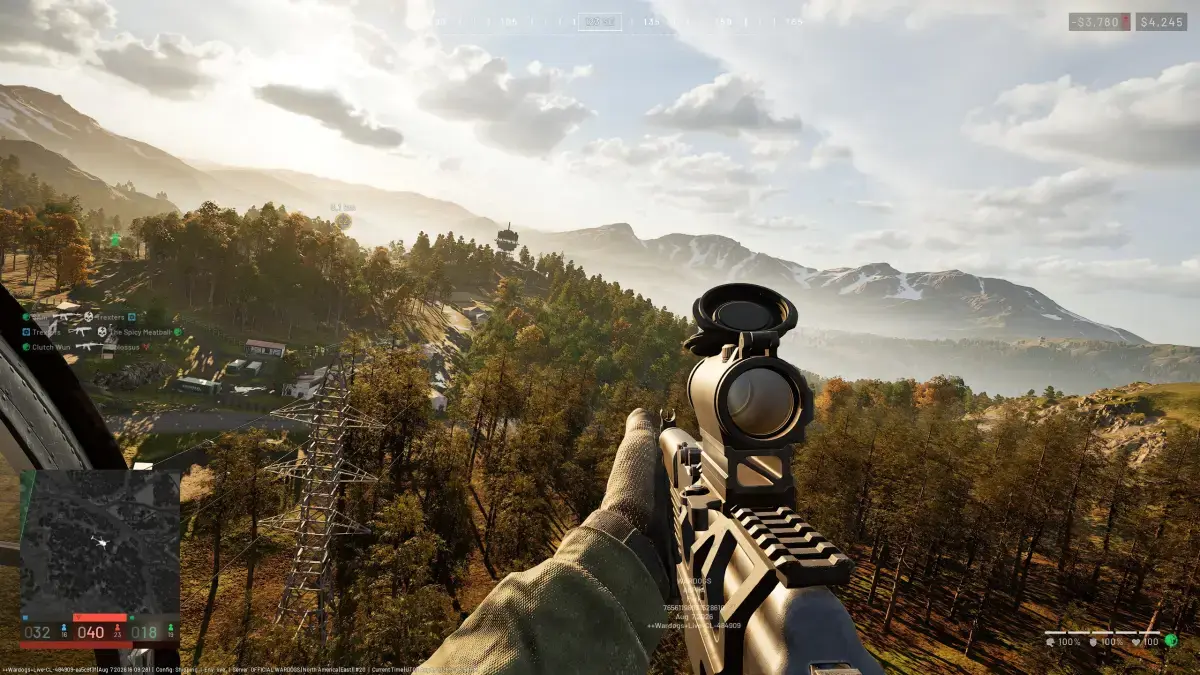
Indeed, the fragility of this balance was evident in the weekend test: Many players were safely hunting kills from towers with scoped rifles instead of advancing toward the objective. FOB defense is important, of course; but this behavior seems to be an output of the "profit maximization" motive. Exactly this balance might be the area Wardogs needs to work on the most during early access.
Teamplay and Class System: Freedom or Chaos?
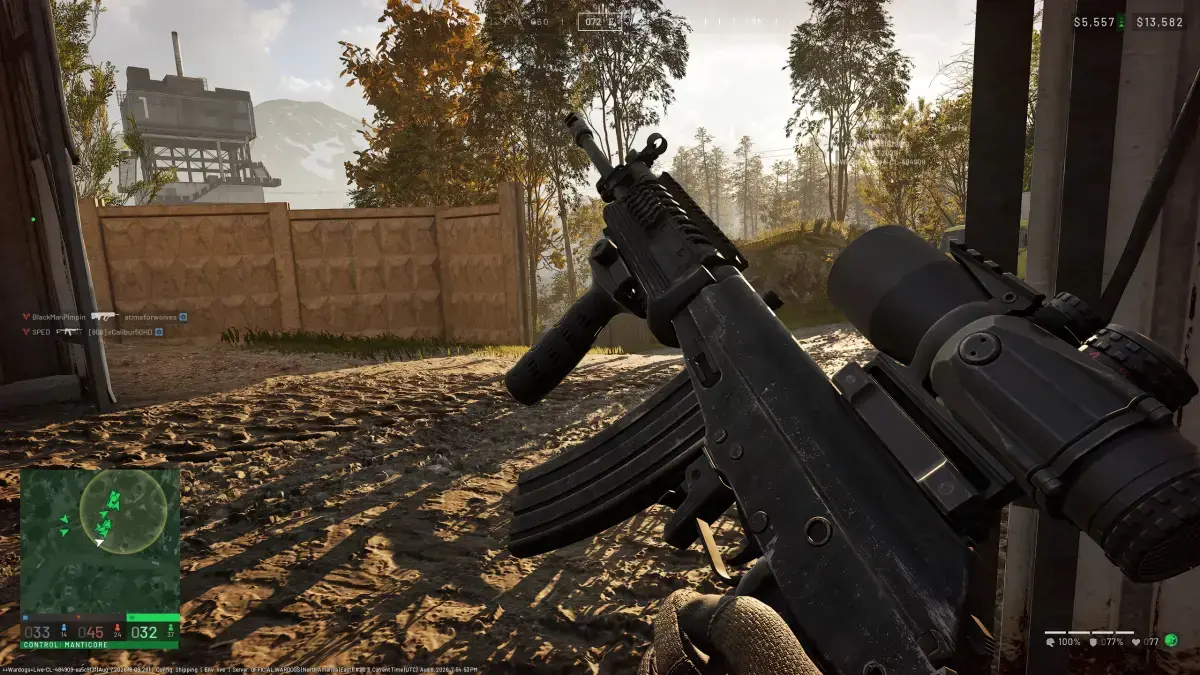
One of Wardogs' most controversial design decisions is the absence of a class system. Instead of official classes, tools like rocket launchers, defibrillators, and hammers can be purchased by anyone. While this may look like freedom at first glance, it can create serious problems for team composition. While class-based games like Squad ensure that a team maintains the balance of every role, in Wardogs it can be hard to find someone who bought a hammer to break into enemy FOBs, carries extra bandages, or has unlocked a rocket launcher. For instance, in the weekend test, it was seen that many players couldn't even unlock the rocket launcher.
On the other hand, this "laissez-faire" approach has its own appeal. There are no situations where fast-loading players grab the sniper role or you are forced into a medic role that no one wants. Every player can determine their equipment based on their current needs and preferences. This makes the game less organized compared to its closest rivals, but it is also the source of freedom and naturalness. It can be said that Bulkhead has been successful in making cooperation natural by setting clear objectives, simplifying logistics, and keeping the prices of the most critical equipment low. Although the lack of order brought by a class system complicates tactical planning, it's clear that the game offers a much more fun and fluid experience when played with a group of friends.
In this context, the balance Wardogs strikes between "individuality" and "team play" seems likely to determine the fate of its player base. If a good balance can be established between the rates of earning money and players' willingness to take risks, the game can attract both tactic-focused groups and those seeking chaotic fun. The tendency for safe sniper farming observed in the closed test shows how important balance adjustments are.
Early Access Plans and the Studio's Stance
Wardogs will enter early access on September 10. According to plans announced by Bulkhead, a two-year early access period is envisioned. The game is priced at $40, but the studio says they will refund those who don't like the beta starting August 21. Additionally, there is a promise of "zero monetized content" during early access: meaning there will be no items purchased for real money in-game. The exception will be a supporter pack. According to statements, skins and cosmetic items will always be earned by playing, not bought with money. Also, the two-year early access period opens a wide window for players who want to see the game's development roadmap.
These statements paint a positive picture in terms of the studio's reliability and player-friendly approach. Especially in an era when many manufacturers have made monetized content a normalized part of early access, the promise of "earned skins" is seen as a pleasant surprise. Moreover, Wardogs being a PC-priority FPS and supporting community servers is the kind of detail that charms enthusiasts of the genre. Indeed, one closed-test player highlights the importance of this stance by saying, "they're really speaking my language."
Conclusion: Does Wardogs Deserve the Hype?
Wardogs presents a quite confident image at first glance. Offering a strong core game mode, solid foundations, and an unusual "economy" idea for the genre, the game starts early access with an important foundation. Of course, there are balance issues: early problems like class roles not being established and some players hunting kills from safe spots seem improvable with the studio's touches. Still, how open the player base is to criticism is promising given the current discussion topics.
Is the claim of being the next big multiplayer FPS exaggerated at this stage? Rather than a definitive claim, it seems to promise a potential hope. If Wardogs can find its rightful place between mil-sim harshness and arcade fluidity, it could bring both tactical players and casual FPS fans together on the same map. For now, there are enough reasons to get excited and watch the process; September 10 is the eagerly awaited meeting date. In conclusion, as an ambitious title that questions the genre's habits, Wardogs is one of the games to be followed most closely in the coming months.