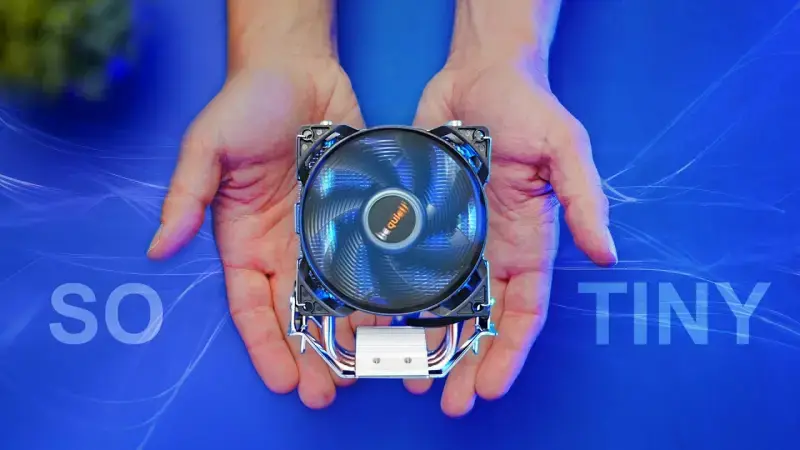
When building a PC, one of the most frequently postponed parts is the CPU cooler. People allocate most of the budget to the graphics card, processor, or storage; when it comes to the cooler, the approach becomes "the stock one will do" or "I'll buy the cheapest one." Yet be quiet!'s new Pure Rock Slim 2 shows that even on a tight budget, serious cooling can be achieved. This compact tower cooler with a 92 mm fan, at around $25, brings the question "do I really need a huge cooler?" back into focus. In this article, we'll go through what the product offers, which systems it makes sense for, and where it hits its limits.
Why Are Compact Coolers Back in the Spotlight?
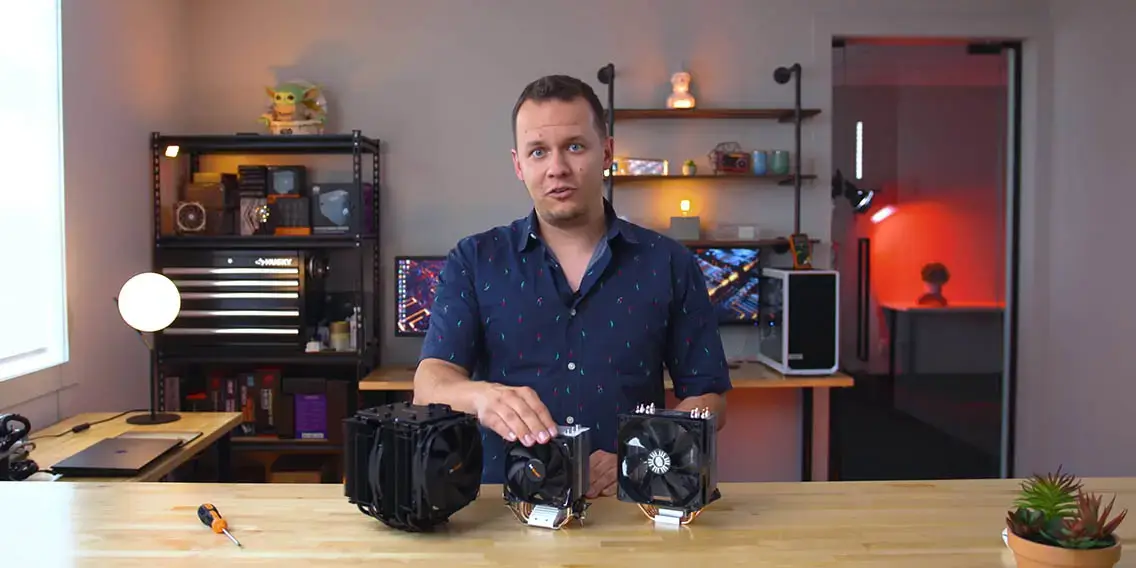
When people think of tower coolers, huge metal blocks usually come to mind. Models with 140 mm fans that cover nearly half the motherboard are, of course, still the safest choice for high-wattage processors. But not everyone needs such a monster. Office PCs, small form factor (SFF) systems, media centers, and mid-range gaming machines can often run happily with a much more modest cooling capacity.
That's where the long-established 92 mm class comes to the fore. Many brands have had products in this segment for years, so be quiet!'s move doesn't technically claim to be an innovation. The real issue is that a large, well-known manufacturer is entering this class with a genuinely aggressive price. What makes Pure Rock Slim 2 noteworthy is that it brings some approaches used in high-end coolers to a much cheaper package. In short, the product doesn't claim to be 'the best'; it claims to be 'enough for most users.'
This distinction matters, because in the hardware world we're constantly conditioned to want more. Higher TDP, a bigger radiator, more heat pipes... Yet in real-world usage scenarios, situations where the CPU runs at full load continuously are the exception, not the rule, for most gamers and office users. Once you accept this reality, it also becomes clear why a small cooler is still a valid option.

Dimensions and Case Compatibility: The Real Selling Point Is Here
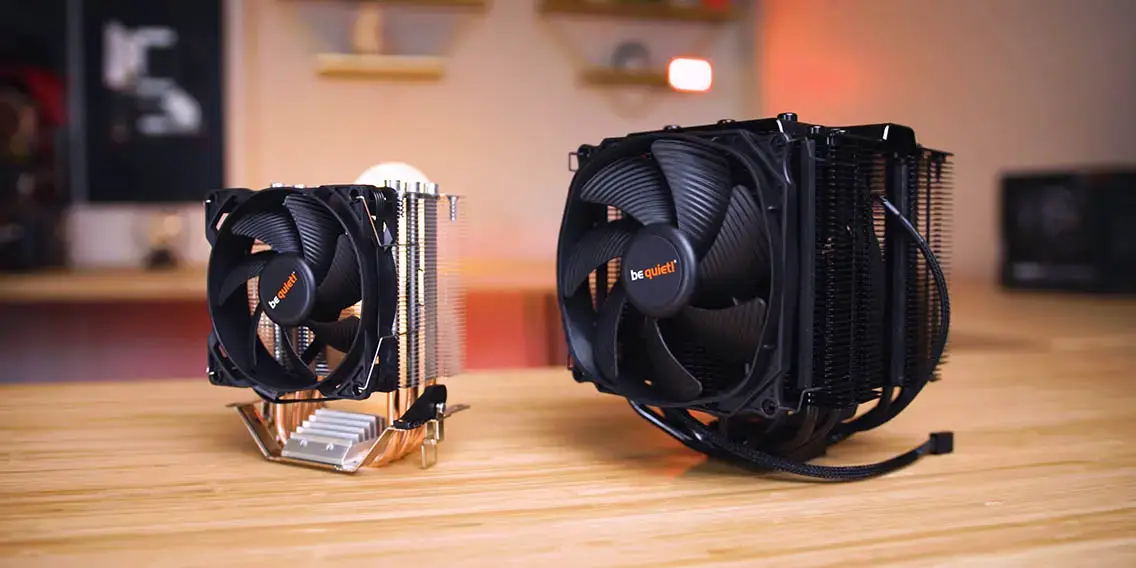
Pure Rock Slim 2's strongest card is its dimensions. The cooler is only 135 mm tall, 82 mm deep, and 97 mm wide. Next to a typical tower cooler, these measurements are truly small and largely eliminate the 'will I be able to close the side panel?' worry. Especially in cases with height restrictions, this difference becomes a lifesaver.
To give a concrete example, the popular small form factor case Cooler Master NR200 accepts a maximum cooler height of 155 mm. This limit rules out many tower coolers that could be considered compact right from the start. Pure Rock Slim 2, however, fits easily into this case and remains in a position where it can work with the case's airflow. In a narrow case, the cooler being positioned in harmony with airflow rather than against it is a detail that directly affects thermal performance.
The second major advantage is memory compatibility. The cooler is so thin that even if all RAM slots on the motherboard are populated, there is no conflict. For users with high-profile memory or those planning a memory upgrade in the future, this is a convenience that should not be overlooked. With large coolers, you may need to slide the fan up, remove memory heatsinks, or switch to a completely different model; here there's no such hassle.
When all this comes together, the picture is this: If your goal is to install liquid cooling or spend money on a cooler that fills the case, this product isn't for you. But if your goal is to run your system at reasonable temperatures, quietly and without problems, compact dimensions aren't a shortcoming but a direct advantage.
The Market Reality Behind the $25 Price Tag
With pricing, things get a bit complicated. The product's official list price is $25, and that's without any discount. So from time to time it's possible for it to drop even below that. However, a recent problem in the market makes reaching this price harder: third-party sellers buy newly released computer components in bulk and relist them on platforms like Amazon and Newegg at much higher prices.
The practical result is that you need to look a bit more carefully at listings when shopping. You may see multiple seller listings for the same product and encounter serious price differences between them. The good news is that the $25 price is still available somewhere; you just need to avoid jumping on the first listing you see.
Putting this price debate aside, the product's position in its segment becomes clearer. There are many coolers in the 92 mm class on the market, and some of them have been on sale for years. However, models at this price level from a major brand, backed by a well-known manufacturer's warranty and service support, are quite limited. What makes Pure Rock Slim 2 attractive is exactly this balance: brand trust and a low price meeting in the same package.
Design: A Simple but Capable Structure
On the design side, be quiet! hasn't indulged in unnecessary decoration. We have a dense aluminum fin stack and three 6 mm copper heat pipes reaching down to the base. The heat pipes sit on a direct-touch base; that is, the pipes meet the processor surface without intermediaries. This is a common industry approach that keeps costs low while making heat transfer efficient.
Factory-applied thermal paste comes on the base. A small but important warning: before starting installation, do not touch this protective layer, because if the paste is wiped off, you'll have to reapply it. Although it seems like a minor detail, for someone installing a cooler for the first time, it's an easy trap to miss.
The 92 mm fan on the cooler is the brand's Pure Wings 2 model and can reach up to 2300 RPM. At first glance, this speed may seem high; many 120 mm coolers run at much lower speeds. However, RPM alone doesn't mean noise. Blade design, bearing quality, and airflow geometry are the real factors that determine the outcome. Indeed, this fan stood out as one of the quietest fans we encountered during testing; we'll return to this in the performance section.
The differences from the previous Pure Rock Slim are modest. The fin stack has been extended slightly toward the back, and a small change has been made to the base plate. The most notable innovation is in the fan and the mounting system. So if you have the first generation, there's no revolution that should make you rush to upgrade. If you're buying for the first time, it makes sense to choose the new version directly.
Installation: Great Convenience on AMD, Classic Method on Intel
The installation process is one of the product's most prominent aspects. be quiet! ships the AMD bracket pre-installed right out of the box. This is a rational choice that doesn't make the user struggle at the first step and acknowledges how common AMD systems are on the market. On the AMD side, no extra mounting hardware is needed either: the cooler fits directly onto the standard AMD mounting hardware included with every motherboard.
So how does installation work in practice? You turn the cooler upside down and press the small brackets with the serrated parts facing down, then rotate the cooler to clip it onto both sides, and finally press one side, then the other, to complete the process. In total, it's a few minutes' work. The only point to note is that this is not a screw-mounted installation: clip-based systems inevitably leave a very small amount of play. However, be quiet! has controlled this gap so well that in practice you don't feel any annoying movement. The result achieved with standard mounting hardware offers a genuinely well-executed installation experience.
On the Intel side, the picture isn't as bright. You need to remove the AMD brackets with two screws and install the Intel brackets in their place. Moreover, be quiet! has chosen to use the old-style push-pin mounting method for Intel. This system is genuinely practical in terms of ease of use, but it isn't ideal when it comes to mounting pressure. Screw-based systems apply more homogeneous pressure to the processor surface, while the push-pin method falls behind in this regard. So Intel users have to choose between ease of installation and mounting quality.
Still, in the overall assessment, the installation process should be counted as a plus for the product. On both AMD and Intel, it offers an experience that doesn't keep the user busy for hours and doesn't require a toolbox. Especially for someone building a system for the first time, this may be more important than technical specifications.
Noise and Performance: The Limits of Silence
Now for the part everyone is most curious about. When fan speed percentages and decibel measurements were compared in tests, the result is quite impressive: even at 70 percent speed, the fan reaches the minimum noise floor of the measuring device. In other words, up to that point you practically don't hear the cooler. Even at full speed, the upper limit stays around 40 decibels. This value means it gets ahead of many rivals that usually run much louder.
More interestingly, Pure Rock Slim 2 isn't crushed at all in competition against larger and more expensive coolers. In tests at the 95 W level, it puts up a directly competitive showing. In comparison charts, we see that the 212 Evo is more expensive, yet Slim 2 delivers cooling on par with Noctua U12S at lower decibel levels than the 212 Evo. This indicates just how interesting a point the price-performance balance has reached.
When moving up to the 125 W level, an even more striking result emerges. To remind you, 125 W is quite close to Slim 2's maximum TDP threshold of 130 W. Despite this, the cooler handles the situation surprisingly well. It's even hard to believe the results at first glance; the tests were repeated many times and the result didn't change. The product provides almost identical cooling to the Noctua NH-U12S up to 37 decibels, and it leaves the 212 Evo behind at every level of this test. A picture you wouldn't expect from a small cooler.
To be fair here, Pure Rock Slim 2 isn't a product that dominates everything. It quickly reaches its limits with high-wattage processors, and although it looks unrivaled in this price category, there are many solutions that surpass it in the upper segment. Still, considering its size and price, it becomes difficult to recommend an alternative, especially for those looking for an affordable cooler. Fitting silence and performance into the same package is the product's strongest scorecard.
Where Does It Choke? The 150 W Reality
However, when things move up to the 150 W level, the picture changes completely. Under this load, the cooler reaches its thermal capacity very quickly and has done all it can. There's not much more to say here: at this heat load, you need a larger cooler.
Knowing this limit is critical when making a purchasing decision. If you're using a processor in the 65 W or 95 W class, or building a mid-range gaming system, Pure Rock Slim 2 will be more than sufficient. But if you have a processor that draws high wattage, is overclocked, or runs continuously under heavy workloads, this product will let you down. When choosing a cooler, looking at your processor's actual power consumption is much healthier than trusting generic recommendations.
Another important point is this: the 130 W maximum TDP value is a reference for typical usage scenarios, not for a system that will run at full load continuously. How the product behaves under short bursts of high load may differ from its behavior under sustained load. Therefore, when evaluating the product, you need to clarify the question 'what kind of work do I do?'
Conclusion: Who It's For, Who It's Not For
To sum up, be quiet! Pure Rock Slim 2 combines compact dimensions, good noise levels, and ease of installation in a single package. Meeting the three basic criteria you look for in a cooler at this price level is impressive. Moreover, it does this by competing with entry-level coolers that have been sold for years and are everyone's choice.
So who should buy this cooler? For those building a system in a narrow case, those who have filled all memory slots, those using high-profile RAM, and those who want to shift their budget to other parts, the product is clearly a logical choice. It also offers more than enough capacity for those building a quiet office or gaming system with low-wattage processors.
Who shouldn't buy it? If you have a processor that draws high wattage, runs continuously at full load, or is aggressively overclocked, you need to turn your gaze to larger and more expensive solutions. Also, users on the Intel side who are uncomfortable with the push-pin mounting method may turn to alternatives.
The main lesson this product teaches is this: coolers shouldn't be evaluated only by their size. A small stack of metal, when paired with the right system, can produce results close to much larger and more expensive rivals. Most users don't actually need a massive tower cooler; what they need is a quiet, affordable solution compatible with their system. Pure Rock Slim 2 fits exactly that description, and considering its $25 price, it's quite easy to recommend in this segment.