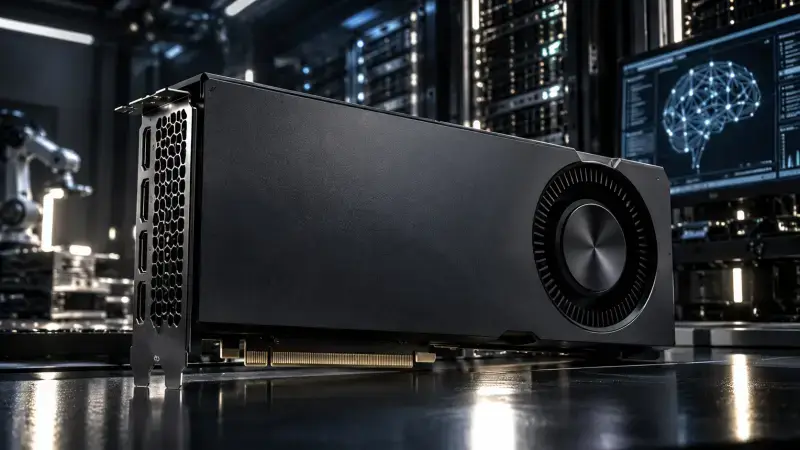
Nvidia's GeForce RTX 5090 model comes with 32 GB GDDR7 memory in its standard form and is considered one of the most powerful cards gamers can access today. However, a manufacturer operating in China claims to have tripled this limit: Shenzhen Suqiao Intelligent Technology is listing a modified RTX 5090 said to have 96 GB VRAM on Alibaba for $3,888. At first glance, the news can be read as "a new monster card for gamers," but the real target audience is not gaming. Those chasing this card are mainly developers who want to run local AI models on their own hardware, researchers, render studios, and teams dealing with data-intensive GPU workloads. In the rest of the article, we examine in detail why this product emerged, how it could be technically possible, which user groups it matters for, and at which points a healthy dose of skepticism is warranted.
Why has VRAM become so critical in the AI era?
Graphics memory was for many years a parameter associated only with textures and resolution settings in games. Today, the picture has completely changed; locally run language models, image generators, and other AI applications work directly depending on VRAM capacity. As long as a model fits entirely into graphics memory, it generates responses at very high speeds; but when capacity is insufficient, data begins to be moved to system memory or disk. This "offload" process can dramatically worsen the number of tokens generated per second or the time it takes to create an image. In other words, on the AI side, memory capacity often becomes a more decisive factor than raw compute power. This is exactly the point the source emphasizes: rather than a few percent more core performance, enough VRAM for the model can be much more valuable.
In this equation, although 32 GB is a generous figure for a high-end gaming card, it can quickly become a bottleneck for local AI workloads. For this reason, users have long had to turn to professional solutions with larger memory but much higher prices. The claim of a 96 GB GeForce card is making noise because it promises to partially overcome this wall, even if only partly.
Who is selling the card and why is the $3,888 price tag drawing attention?
The company listing the product, Shenzhen Suqiao Intelligent Technology, is not a completely new name in the industry. According to available information, the company has been involved for more than a decade in the production or adaptation of graphics cards, motherboards, and server hardware. So the company's history, at least at the profile level, does not fit the picture of "an unknown seller trying to make a name for itself for the first time with a sensational GPU modification." This provides a reason to take the claim seriously; however, by itself it does not prove the product's reality.
The truly surprising part is the pricing. For a Blackwell card with 96 GB of memory modified to this extent, $3,888 is considered a quite aggressive figure. Nvidia has traditionally differentiated gaming and professional cards not only through drivers and supported features but also through the amount of memory offered. A user needing very high VRAM therefore often has to turn to professional models that are many times more expensive. A GeForce modification that lowers the cost per unit of memory thus theoretically fills a serious economic gap. However, the appeal of the price also brings with it the risk of an unverified product.
How can 96 GB be possible? The clamshell PCB and GB202 factor
The technical side is among the first things that make the card interesting. While the standard RTX 5090 has 32 GB of memory, the modified version is said to use a specially adapted PCB. This card uses a configuration called "clamshell"; that is, memory chips are placed on both sides of the PCB. This allows much more capacity to be connected to the existing memory interface. This approach is not new; in the past, cards that increased memory capacity with double-sided placement have also been seen. The critical point is that the same data path has to send signals to more chips on each channel, and this requires additional engineering in terms of signal integrity and thermal management.
The GB202 graphics processor underlying the card makes such a setup meaningful, at least in principle. Nvidia does not use the Blackwell architecture only in classic gaming cards; it also builds professional solutions offering much larger memory capacities on the same architecture. Therefore, the fact that the memory interface on the chip side can handle large capacities shows that the modification is not technically "impossible." Still, the fact that a card can technically be equipped with more memory does not mean that every listing sold on the market contains exactly the promised hardware.
The contradiction in the product description: What does the GDDR6X reference mean?
The most concrete problem that draws attention in the listing concerns the memory type. One part of the product description mentions GDDR6X memory at 14 Gbit/s. However, the standard GeForce RTX 5090 uses GDDR7 memory. This statement may have resulted from an erroneous description or one copied from another product. Alternatively, it is also theoretically possible that a genuinely different memory was chosen during the modification process, but in that case the card's performance expectations would change completely.
Although this inconsistency may seem like a small typo, it is an important warning signal for a purchasing decision. Because an independent and complete analysis showing which components the card was actually produced with is not yet available. Without such an examination, it is impossible to definitively assess the accuracy of the 96 GB capacity and memory technology promised in the listing. This uncertainty stands out as one of the most important limitations of the news.
For whom is this card meaningful, and for whom is it completely unnecessary?
The appeal of a 96 GB GeForce card changes completely depending on the user profile. In an ordinary gaming computer, such a modification makes almost no sense, because even the most demanding games use only a portion of the existing 32 GB. In contrast, for memory-intensive GPU workloads, the picture reverses. We can summarize the prominent use cases as follows:
- Local AI developers: This is where the strongest argument lies for those who want to fit models entirely into graphics memory and eliminate performance losses caused by data movement.
- Research and academic work: For teams trying to reach as much VRAM as possible on a limited budget, the memory-to-cost ratio becomes decisive.
- Render and visual production studios: Large scenes, high-resolution textures, and complex simulations are among workloads that hit the memory wall.
- Gaming-focused users: Since the standard 32 GB is already more than enough, 96 GB offers no practically measurable advantage.
- Enterprise users requiring professional certification: Because warranty, driver support, and long-term supply assurance are priorities, modified cards are generally not a suitable choice.
This picture clearly shows that the card is not "a better RTX 5090 for everyone." The product targets a specific niche need and does not constitute a rational choice for users outside that niche, no matter how attractive its price may be.
Open questions: firmware, driver compatibility, and warranty
There are a series of questions that are as important as memory capacity but are often left in the background in listings. At the top of these is firmware and driver compatibility; it remains uncertain whether a modified card will work smoothly with standard GeForce drivers. Long-term stability is also a separate topic; double-sided memory placement requires testing under sustained high load in terms of heat and signal stability. PCB quality and power delivery design are critically important in this kind of modification, because additional memory chips bring extra load on both the power and cooling sides.
The issue of warranty and support is at least as decisive as the technical risks. For a card bought from a small-scale modification seller, it is not clear how the process would work in the event of a failure, whether spare parts can be obtained, and how long after-sales support would last. All these uncertainties seriously offset the appeal of the low price from the user's perspective.
Verification chain: Which sources do we base the news on?
In such unusual hardware news, where the information comes from is at least as important as the news itself. The table below summarizes the verification chain on which the 96 GB RTX 5090 claim is based:
| Source | Content and contribution |
|---|---|
| Source | The original post and verified link information forming the basis of the news; the first step in the source attribution. |
| Tom's Hardware | The original news article dated September 11, 2026. It covers Shenzhen Suqiao's modified RTX 5090 carrying the 96 GB VRAM claim; confirms the $3,888 price on Alibaba and discusses both the technical implementation and the contradictory memory statement. |
| Tom's Hardware GPU News | The second verification in the existing GPU news archive. It lists the 96 GB RTX 5090 as a news item dated September 11, 2026; confirms the 96 GB capacity and the $3,888 price. |
| Tom's Hardware News Archive | Archival evidence of the publication date and the positioning of the news as a current hardware story belonging to the September 2026 agenda. |
| Vorschau | Price comparison preview: a list showing retail prices and seller information for standard RTX 5090 models; it allows comparing the modified card's price with market reality. |
Comparison with standard RTX 5090 prices
To meaningfully evaluate the modified card's claimed price, it is necessary to look at standard 32 GB RTX 5090 models sold on the market. The list below reflects the price comparison data included in the source:
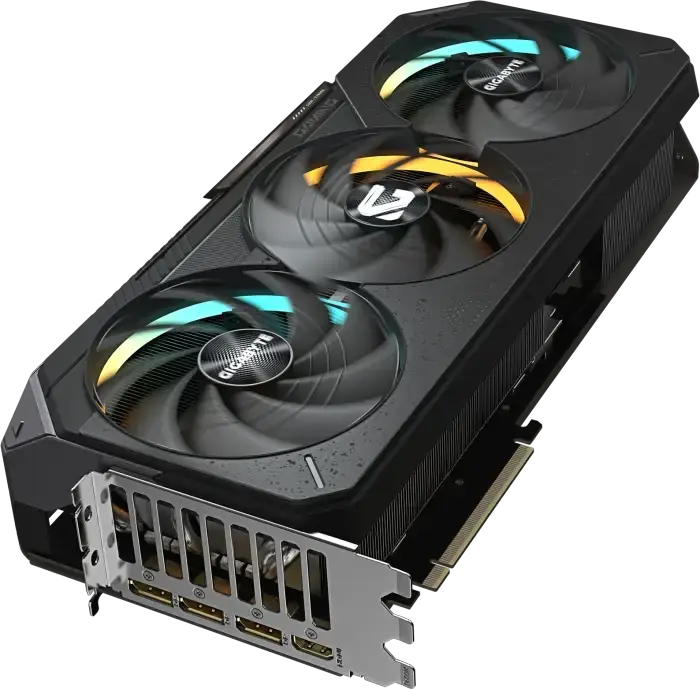
- GIGABYTE GeForce RTX 5090 Gaming OC 32G (32 GB GDDR7) — 5,249.00 € — Cyberport.de
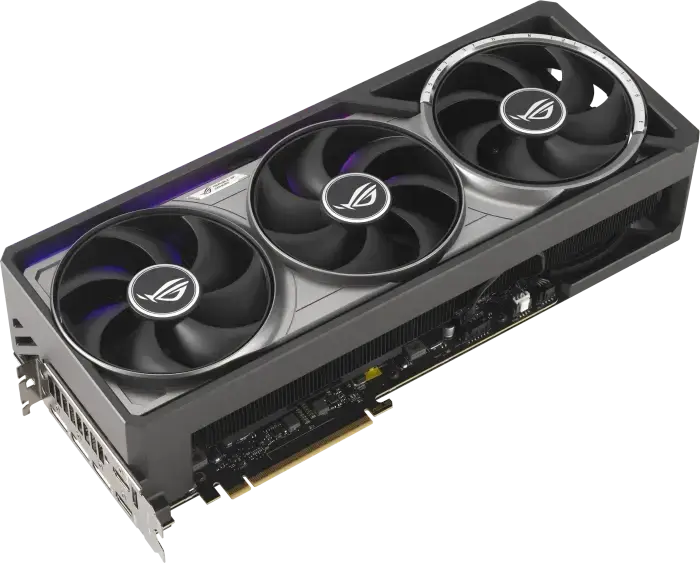
- ASUS ROG Astral GeForce RTX 5090 OC (32 GB GDDR7) — 5,499.00 € — elektroshopquantum
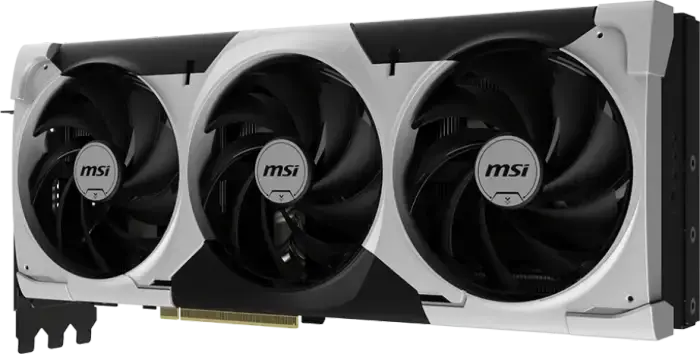
- MSI GeForce RTX 5090 32G Ventus 3X OC (32 GB GDDR7) — 5,731.00 € — Alternate
- ASUS ROG Astral GeForce RTX 5090 Edition 20 (32 GB GDDR7) — 6,999.00 € — Alternate
- ASUS TUF Gaming GeForce RTX 5090 OC (32 GB GDDR7) — 5,299.00 € — computeruniverse.net
This table clearly reveals the economic dimension of the debate. While European retail prices of standard 32 GB models are at the level of thousands of euros, a card promising three times the memory being listed at $3,888 looks extraordinarily advantageous at first glance. However, whether this difference is real depends entirely on whether the card passes independent tests.
Conclusion: Is 96 GB real, or a well-crafted listing?
A GeForce RTX 5090 with 96 GB VRAM, when first heard, seems like a product Nvidia would never offer for the gaming market. Technically, such a memory layout is definitely not fantasy; when the clamshell arrangement, custom PCB design, and the flexibility of the GB202 chip come together, increasing capacity is theoretically possible. The intense demand for local AI applications also explains why manufacturers and modders pursue such solutions.
Still, a healthy degree of skepticism should be maintained. The GDDR6X statement in the product description, the absence of an independent analysis, the uncertainty of firmware and driver compatibility, and the lack of clear warranty conditions are among the questions that need to be answered before deciding. If the card offered by Shenzhen Suqiao actually works as promised, the product before us would not be an extraordinary gaming card but a relatively affordable AI workstation GPU built on GeForce hardware. Verifying that, however, depends solely on independent tests of a card that has actually been delivered. Until those tests are published, the best approach is to treat the 96 GB RTX 5090 claim as a "promising but unproven" headline.